
Thank you for your purchase! Please enjoy this LS Engine Performance Guide
Elgin does get a lot of questions about building performance LS Engines, and this page includes many answers. Here’s a Link to our LS Flyer.
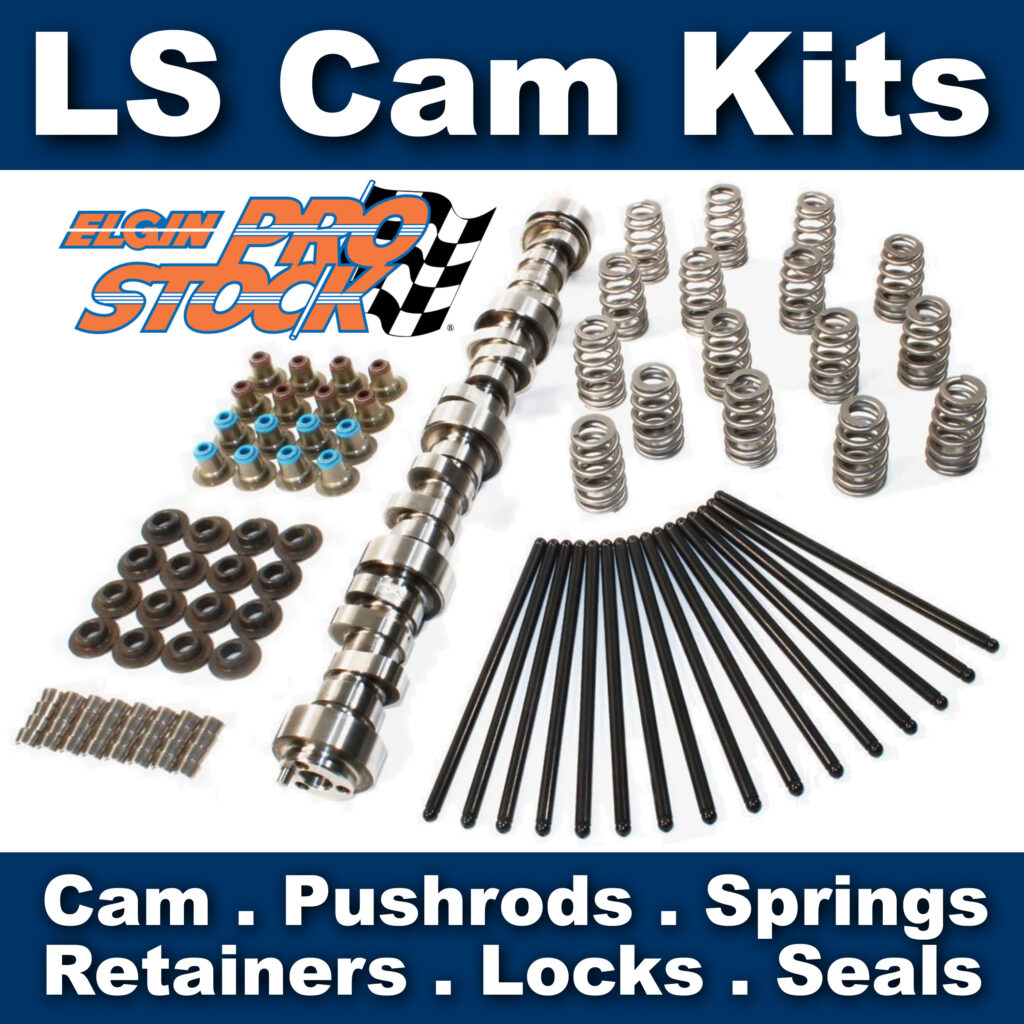
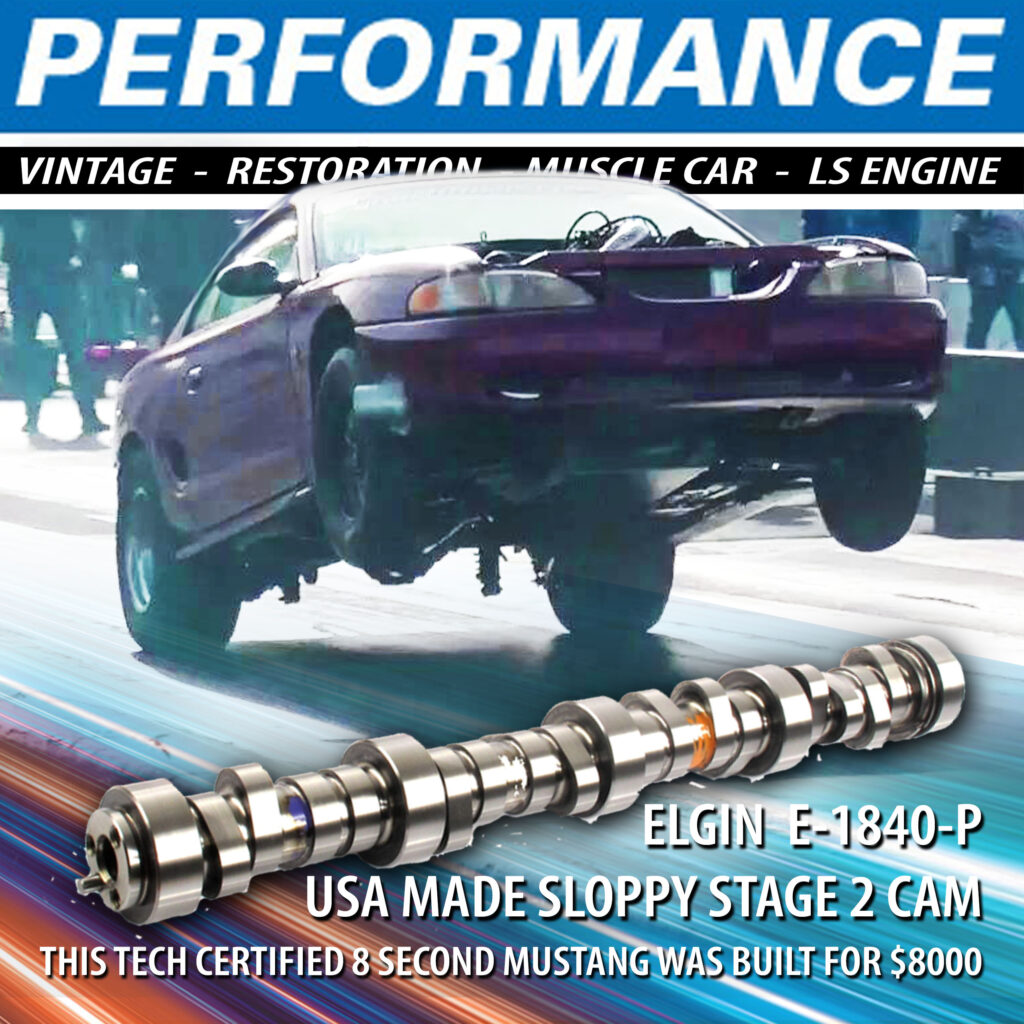
For cams, the E-1840-P / Sloppy Stage 2 is the most popular. Adds 60 hp to a 4.8/5.3 with only swapped springs, should need a converter, tune required. The 1840 in a 6.0/6.2, will work great with turbo, supercharger, nitrous too. We have several customers making 1000+ whp with this cam. Supposedly the 1838 & 1839 will work with a stock tune. There’s lots of feedback that the 1838 is a great daily driver with very similar off-the-line throttle response, plus added top end power. The 1200 series cams are OE GM grinds with descriptions included below.

The following info should help put together kits for Cam/Spring Packages.
Elgin Cam# : Range : Desc. GM Part#
- E-1250-P : D : LS 376 515/525 ASA 88958770
- E-1251-P : C : LS 376 480 Hot Cam 88958753
- E-1252-P : D : LS 454 19166972
- E-1260-P : D : LS 454R 19166975**
- E-1253-P : E : “Showroom Stock” 88958766 *
- E-1254-P : D : GM LS Stage 2 88958772
- E-1255-P : E : GM LS Stage 3 88958773
- E-1256-P : B : ‘Mild RV Cam’
- E-1257-P : C : ‘Mild Street’
- E-1838-P : C : Sloppy Stage 1
- E-1839-P : C : Secret Sauce X
- E-1840-P : D : Sloppy Stage 2
- E-1841-P : D : Sloppy Stage 3
* GM named this cam “Showroom Stock”, for Corvettes to compete in GT Cup racing against Ferraris etc in the “Stock” Classes. This cam is fairly radical, not really street-able for the average drivers, advanced level tuning required.
** Mechanical Lifters, 1.9:1 Rocker arm ratio, for those that want .750”+ valve lift, very advanced tuning and engine building required
Cam Range Guide, Cam Degree Instructions, and more can be found here in our ProStock Catalog
Spring Pressure Recommendations for Cam Ranges
Range : Pres Closed/Open
A : 95/240
B : 105/265
C : 110/280
D : 120/300
E : 125/325
Spring# : Pres Specs : Ranges
RV-9951 : 105@1.800”/265@1.200” : A, B, C : Beehive
RV-126918 : 127@1.800”/370@1.150” : D, E : Beehive Superfinished
RV-107228 : 135@1.800”/410@1.170” : D, E : Conical Superfinished
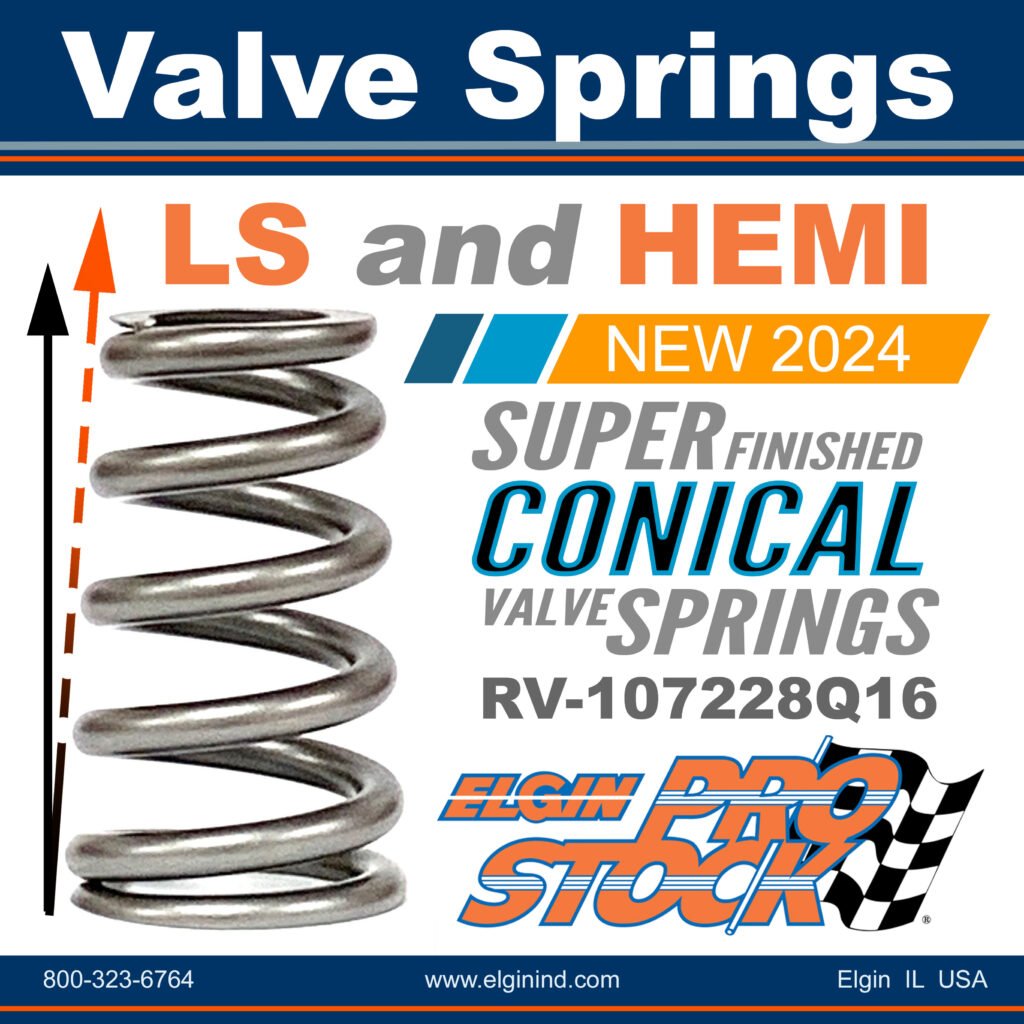
Elgin always recommends using chrome moly 4140 retainers, ER-3990, which fit both the beehive and conical springs. (or ER-4007 for HEMI) The machinists rule of thumb is have spring pressures be within 10% of the Cam Recommendation. Some variances of up to 15% are acceptable with some applications.
Hi-Po Locator (stock heads)
ER-937, use with RV-9937
Valve Spring Retainers
ER-3990, chrome moly retainers LS
ER-4007, chrome moly retainers Hemi

Lifter Notes
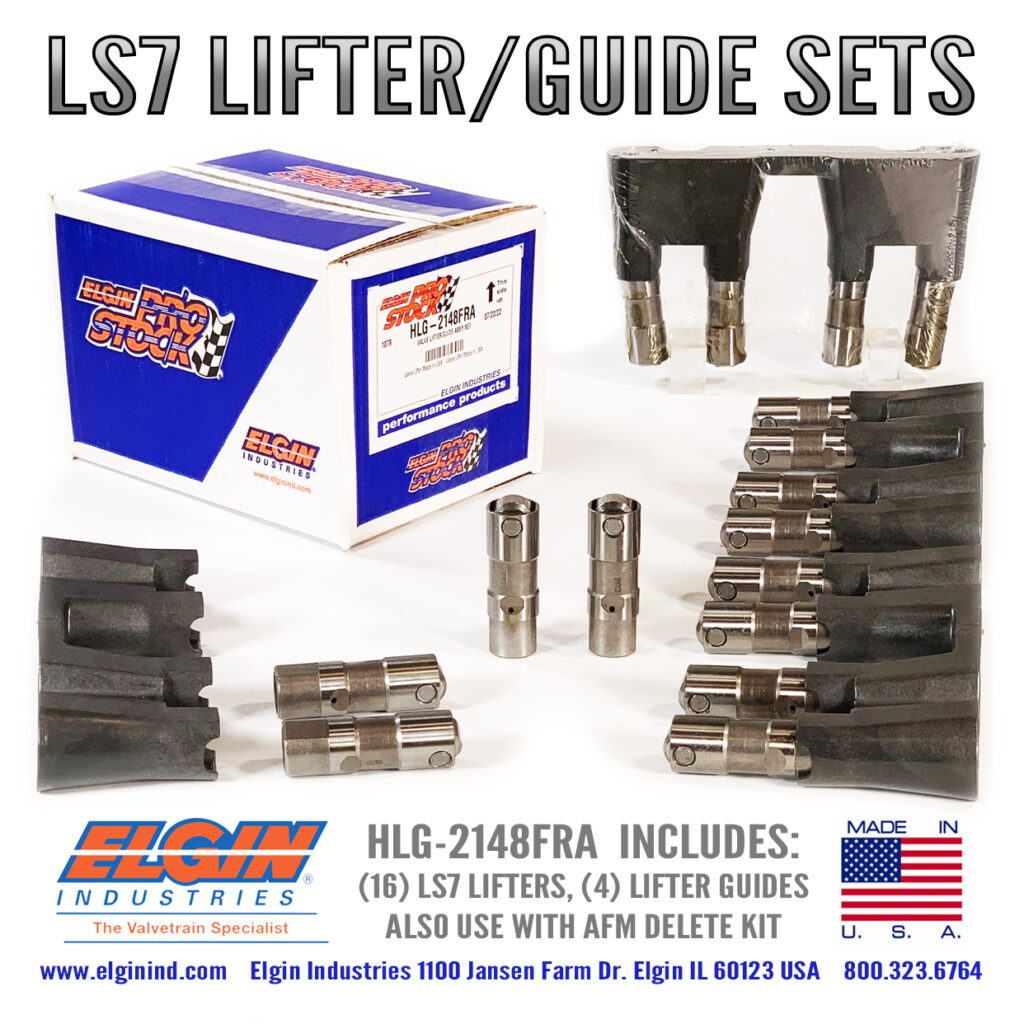
Elgin’s HL-2148 lifters are LS7 style OE replacement Made in USA. Make ceretain to use new lifter guides, as the polymer will fatigue over time. Swapping to a larger cam can contribute to stress on the guides, allowing the lifter to spin in the bore. Once the roller is sideways on the cam, the engine will only last a few minutes before failure. The Elgin lifter guides are also OE replacement.
Lifter + Guide Sets : Made in USA
HLG-2148FRA non AFM
HLG-7026FRA AFM
HLG-7025FRA DFM
Lifters : LS7 Style
HL-2281 Eaton MX Gen 3/4
HL-2148 Delphi USA Gen 3/4
HL-7028 Delphi USA Gen 5
HLG-2148 Guide USA non AFM
Lifters : AFM/DFM
HL-7025 Delphi USA AFM/DFM
HLG-7011F USA AFM front guide
HLG-7011R USA AFM rear guide
HLG-7025 USA DFM guide
Lifter Lash / Pre-Load
Stock Lash : .050”
Performance : .070”-.100”
Lifter Travel : .120” – .150”
The steeper ramp profile of performance camshafts requires more pre-load / lash on the stock lifters. If you are using the stock non-adjustable rocker arms, then you will need a longer pushrod to obtain the correct lash setting. More info on pushrods follows.
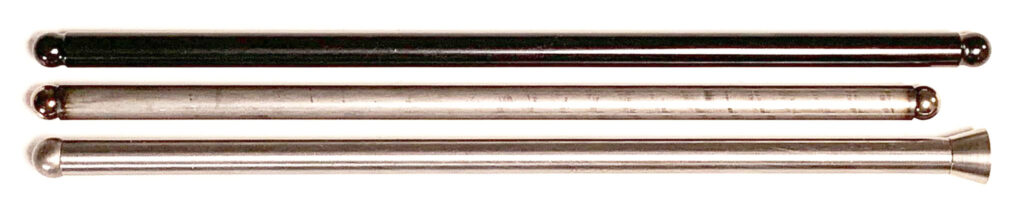
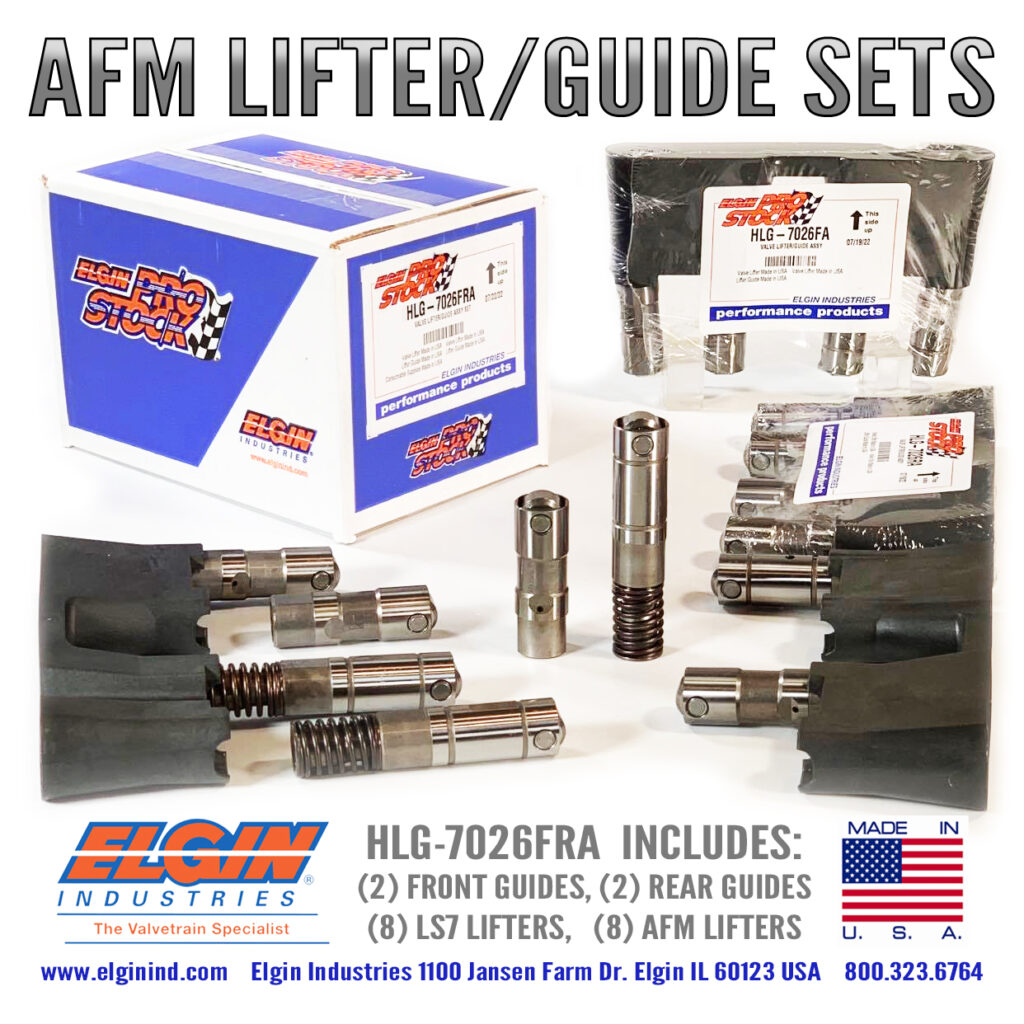
Push Rods
The 1800 series cams have a stock base-circle, so a stock length push rod is fine if all other components are also stock. The 1800 series cams were the Test Cams, and should not be expected to pass emissions. The 1200 series cams do not have a stock base circle as the crate engines use different combinations of components. Changing head gasket thickness (common), rockers, heads, or anything else in the valvetrain could change the geometry of the valve-train and require re-measuring push rod length. Especially if the heads are milled, or the block is decked. A stock typical LS pushrod measures 7.393”. Newer LS based engines use differnet lengths.
PR-614 is stock length LS we manufacture to OE (original equipment) GM Spec.
PR-514 is the same above unit that made from carbonitrited steel tube for increased durability, especially for guide-plates, rated for spring pressures up to 400 lbs.
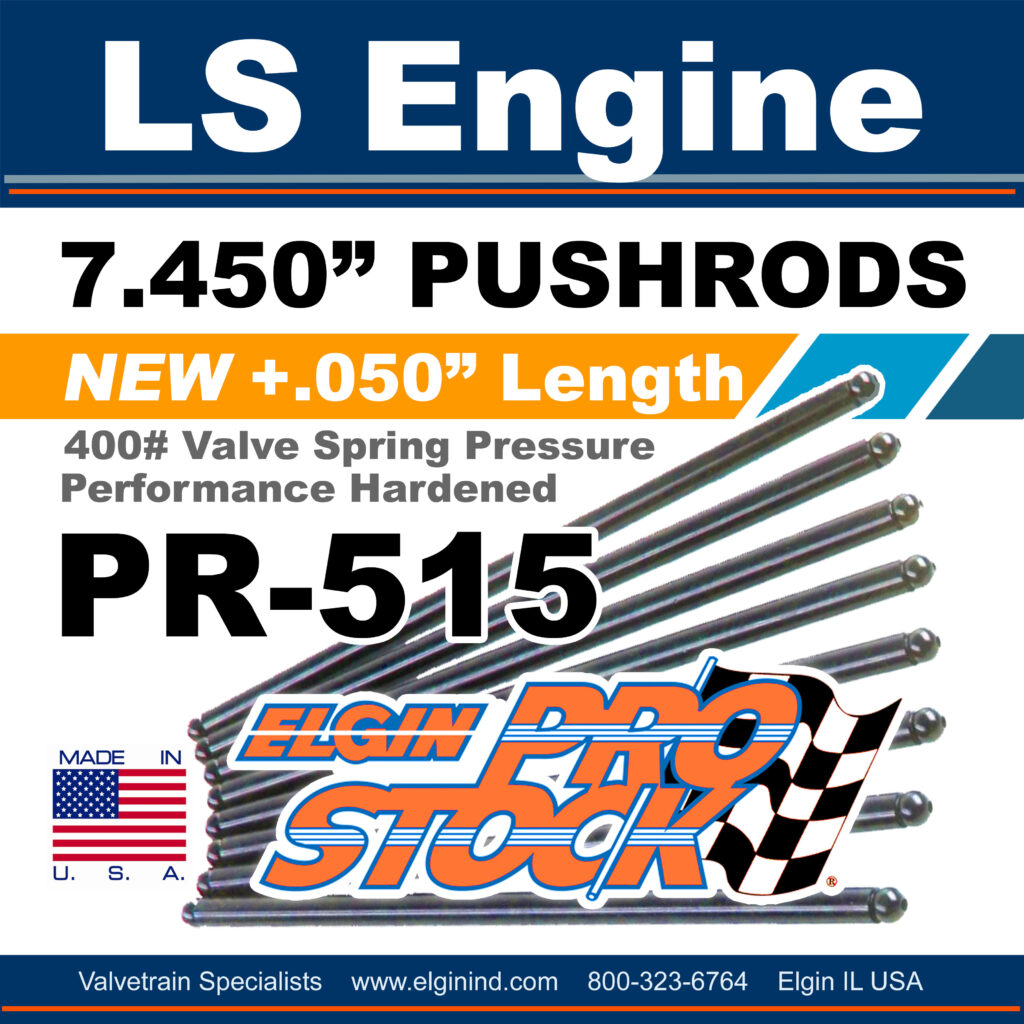
PR-515 is .050” longer for performance camshafts, for street budget builds
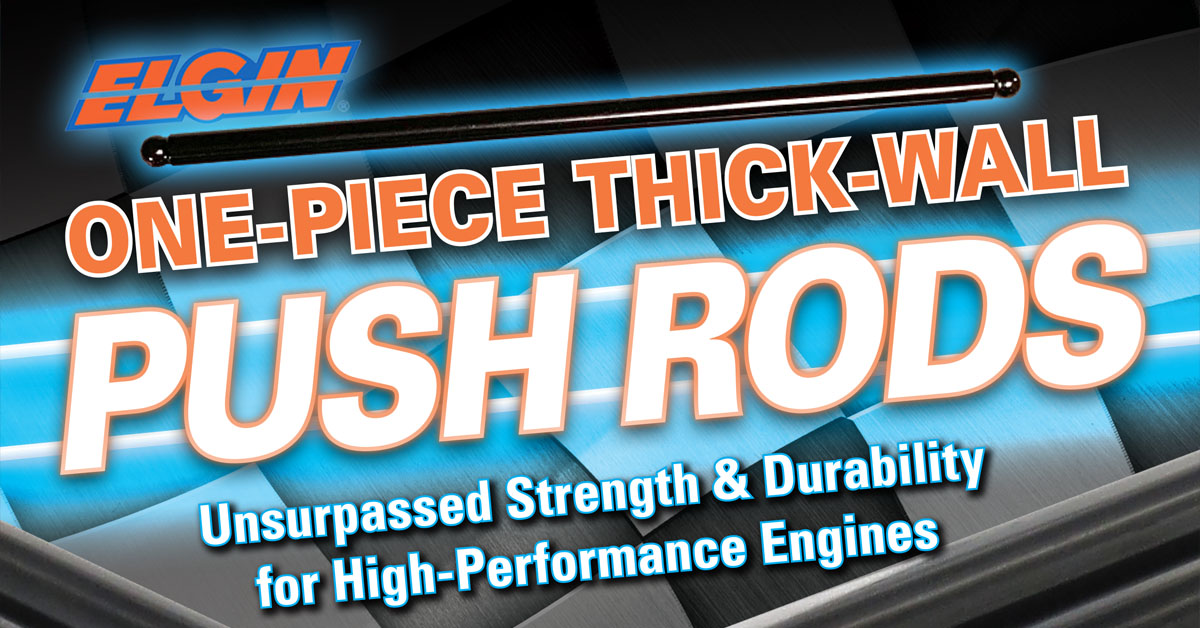
PR-15740 is 7.400” (.007” longer should be fine to take up in the lash), and is one-piece thick-wall chrome-moly (5/16”, .110” wall, 4130, 210* radius ends, 700+ spring pressure) Elgin Pioneered the centerless-ground one-piece pushrod instead of using separate ends welded or pressed. Other companies offer copies that are thinner walled.
PR-15745 is the same as above, but 7.450”. Some guys running turbos beyond 7,000 rpm are reporting valvetrain noise from steeper cam ramp profiles that is taken up when using this .050” longer rods.
Most pushrods are stocked in .050” lengths, and also:
PR-15725 – 7.250”
PR-15730 – 7.300”
PR-15732 – 7.325”
PR-15735 – 7.350”
PR-15737 – 7.375”
PR-15752 – 7.525”
Other custom lengths are available in bulk quantities.
Torque Converter Stall RPM
A quick note on torque converter stall speed: the generic power range of the E-1840-p is 2200-5400 rpm (even though it has proven to continue to produce power beyond 7000 with power adders.) Most street-builds ususally end up with a 22-2500 stall speed. However, there is some engineering that goes into stall speed selection, and that is best recommended by a converter company. Other than cam and trans info, they are going to need to know:
Stall Speed Info Needed:
Vehicle Weight
Axle Gear Ratio
Tire Size
Because a 4 door – 4×4 – on 44”s will likely need a totally different stall speed than an 1800# drag car. The converter company can help you dial-in the right stall, Elgin does not have that info.
Here at Elgin Industries
We have been manufacturing auto parts in the same town (Elgin, IL), by the same family, for over 100 years. We are a Tier1 OE Supplier to our customers such as General Motors, Ford, Chrysler/Stellantis, John Deere, Caterpillar, Harley Davidson, Mack, Navistar, and many more. We are certified Ford Q1, IATF16949:2016, ISO14001:2015, ISO9001:2015, and we are compliant to CQI-9 Heat Treat, and CQI-15 Welding.
Social LS Builds
We owe this LS Fame to a gentleman named Matt who founded a community of successful LS swaps on a thin budget. Matt’s community, named Sloppy Mechanics, is readily searchable on social media, but it’s his Sloppy Wiki website that has an incredible amount of information including his tunes downloadable for free. I recommend that you spend some time looking at builds and their budgets, then pick out one that matches your build, and copy it.
Another excellent resource for unbiased LS Engine info is Richard Holdener’s reviews of different power packages. He writes for several publications including Motor Trend, Engine Labs, On All Cylinders, and has his own Youtube. He compares different cams in the same engine, and then compares different inductions: carb, EFI, with turbo, blown, nos and more.
Starting your Build
There are so many excellent builds out there running from 8 second ¼ mile Mustangs built for less than $8,000, to twin-turbo-1,000+ whp, to LS swapped lawn mowers, there’s something for everyone. A few of my friends have done or are doing LS swaps, and I’ve started budgeting one myself. The most important part of the build is figuring out a budget that is reasonable and attainable for you. Next find a build that is well documented, already functioning and on the road, and copy it. Some people document their build on youtube channels, or Instagram, or facebook, or a forum. It’s cheaper to learn what has and has not worked for them, than to spend your own time and money. Once you’ve started, do your best to work on it a little everyday, even if it’s only an hour on a small part of the project, keep moving forward and you will get to your goal.

Elgin Engine & Chassis Parts
As a factory, we cannot sell retail. We sell to warehouses, then they sell to retailers. There are very competitve prices online. However, there is priceless value of a good relationship with a reputable machine shop / engine builder. You could take a day and visit the shops in neighboring towns, counties, even the next big city. See what they’re working on, what they’re capable of doing, and if they retail parts. They likely already order parts from a warehouse that stocks Elgin, ask them if they can be competitive with the pricing of a couple part numbers. A little bit of mark-up compared to online, can be well worth the trade-off for free knowledge from a seasoned engine builder. If you do choose to buy online, it’s best to find a retailer that offers excellent customer service and supports the Elgin product line, they can also help you with other parts and complete kits.
Engine Building Help
If you have engine building experience or have advanced technical questions, we strongly recommend joining the AERA Engine Builders Association. Since 1922, they continue to be an excellent resource for engine building processes, specifications, failure analysis, and data for all platforms of engines. Today on their website they offer online machining and engine building certifications as well as automotive grants and scholarships.
Same family, same town, since 1919
Again, we’re not engine builders here at Elgin, but please feel free to contact me with any questions or concerns and we’ll do our best to help. Thanks again and have fun with your build!